


Sydney’s Property Correction: Why the Next 12 Months Could Present a Generational Buying Opportunity
By Byron Rose | Director & Buyers Agent, Rose & Jones
Sydney’s property market has entered one of its most significant corrections in decades. Yet while falling property values and subdued buyer confidence dominate the headlines, a very different story is emerging for those prepared to look beyond the immediate uncertainty.
For buyers with a long-term investment horizon, the current market is beginning to present opportunities that have been largely absent for years.
The latest Cotality Home Value Index confirms Sydney dwelling values fell 1.6% in October, 4.7% over the quarter and 9.4% over the past 12 months.
More significantly, Sydney property values are now 10.1% below their February 2026 peak, bringing the median dwelling value down to $1,178,959.
Sydney has now effectively surrendered much of the capital growth accumulated during its most recent upswing.
However, the more compelling development isn’t simply that property prices are falling.
It’s that the balance of power between buyers and sellers has fundamentally changed.
A market correction of historical significance
To understand the current opportunity, we need to appreciate the magnitude of Australia’s broader property downturn.
National dwelling values have fallen for seven consecutive months, with the combined capital cities declining 8.1% since March.
According to Cotality, the speed of this decline is the fastest recorded over a comparable period in the past 40 years.
Sydney has experienced an even sharper adjustment.
Its median house value has fallen to $1,438,090, with house prices declining 10.8% annually. Apartments have demonstrated greater resilience, recording a comparatively modest 5.6% annual decline, with a median value of $857,872.
This divergence is particularly interesting.
Detached houses have traditionally commanded a substantial premium because of their land component, scarcity and appeal to owner-occupiers. However, higher borrowing costs and reduced serviceability have disproportionately affected buyers competing at higher price points.
The result is that Sydney’s house market has experienced almost twice the annual percentage decline of its apartment market.
For buyers seeking established houses in desirable locations, this creates an increasingly attractive environment in which to negotiate.
The real opportunity is disappearing competition
Perhaps the most significant statistic in the November report has little to do with property prices.
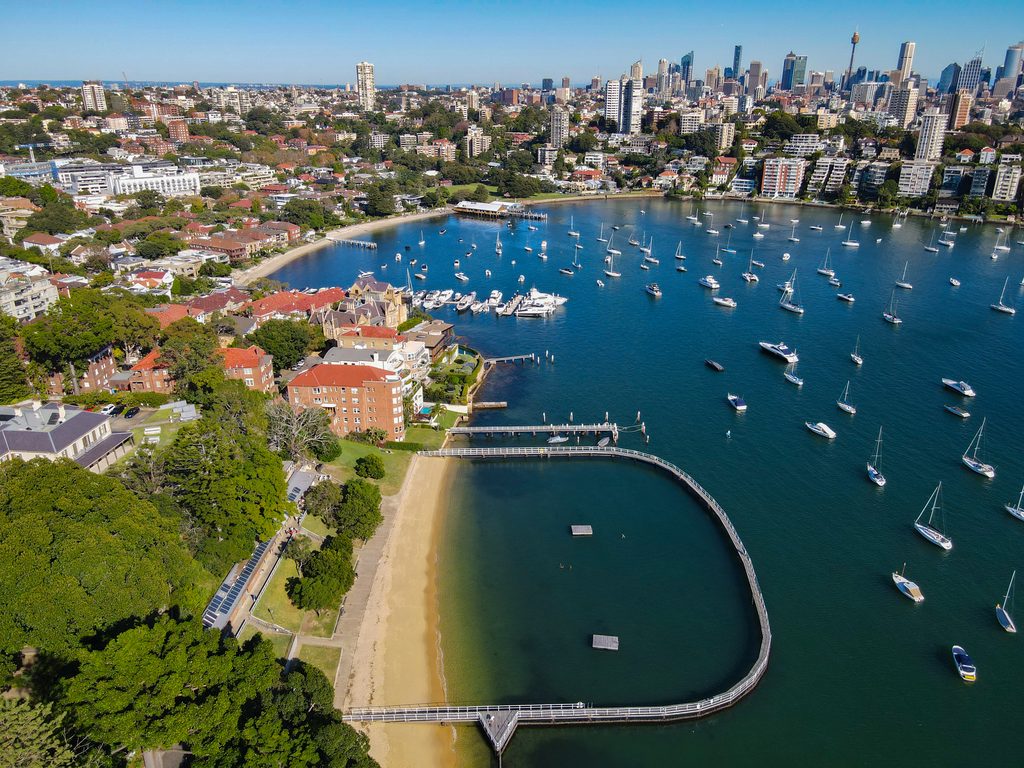
Sydney’s sales volumes have fallen 30% compared with the same period last year.
This is an extraordinary contraction in market activity.
Across Australia’s capital cities, auction clearance rates are consistently below 50%, while properties are taking a median of 39 days to sell, the longest selling period since August 2020.
Vendor discounting has increased to 4.7%, its highest level since May 2019.
At the same time, advertised stock across the capital cities has reached its highest level for this time of year since 2019, despite new listings remaining almost 18% below average.
This tells us something important.
The market isn’t necessarily being overwhelmed by homeowners rushing to sell. Rather, properties are accumulating because fewer buyers are prepared or able to transact.
For years, Sydney buyers have become accustomed to competing against multiple interested parties, making rapid decisions and, in some instances, paying premiums to secure a property.
That urgency has diminished considerably.
Buyers are no longer competing with the same intensity. Increasingly, vendors are competing for buyers.
For those who understand how to negotiate, that is a powerful change.
Not all Sydney markets are created equal
The correction is also highlighting the importance of understanding individual markets rather than relying on city-wide averages.
Interestingly, Cotality’s latest figures show that even Sydney’s strongest-performing regions are recording annual price declines.
| Region | Annual Price Decline |
| Wollondilly | 1.4% |
| Camden | 1.6%, |
| Wyong | 1.8% |
| Blue Mountains | 3.0% |
| Richmond–Windsor | 3.0% |
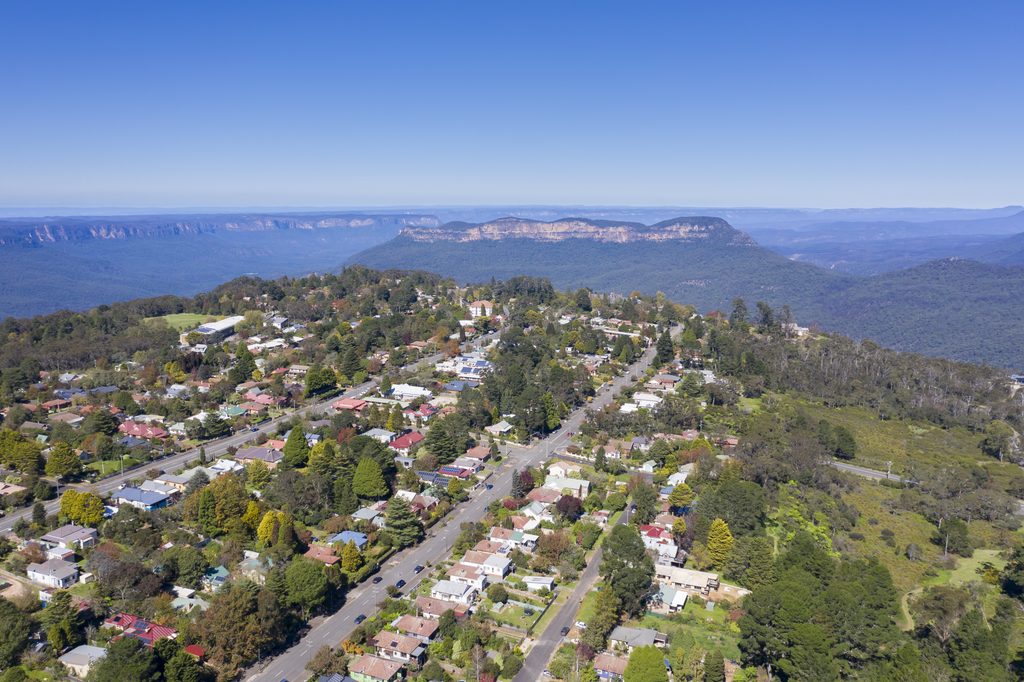
These figures represent Sydney’s five strongest-performing SA3 regions over the past 12 months.
The fact that even the best-performing markets are experiencing negative growth demonstrates just how widespread the correction has become.
However, the relative resilience of these more affordable markets is also revealing.
Borrowing capacity remains a significant constraint, and buyers are increasingly concentrating on locations where their budgets can stretch further.
For investors and owner-occupiers alike, the lesson is clear: property selection matters considerably more in a declining market.
Regional NSW is demonstrating greater resilience
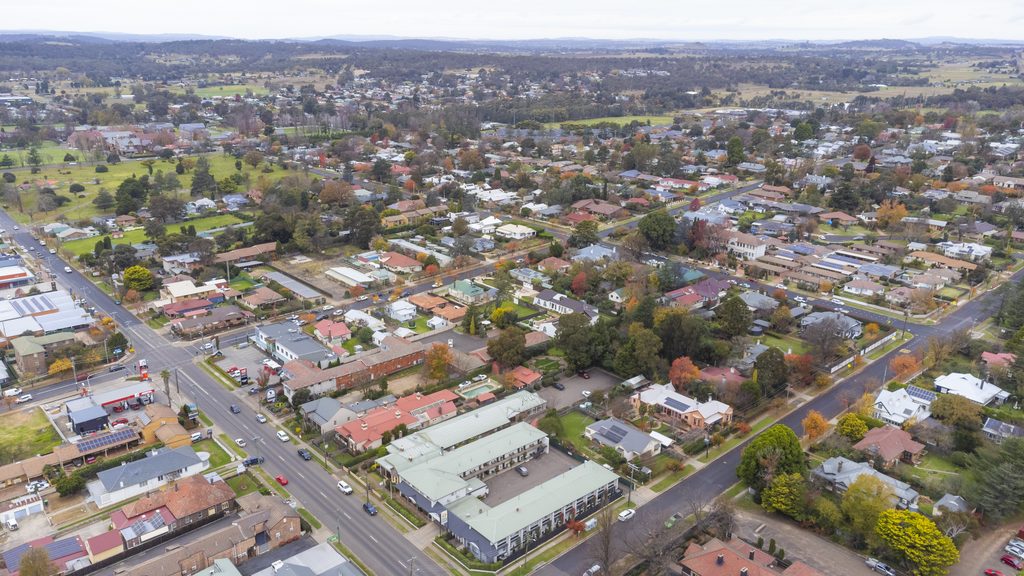
While Sydney has experienced a substantial correction, regional NSW has followed a different trajectory.
Regional NSW dwelling values remain 1.4% higher over the past year, despite falling 2.1% over the latest quarter.
The median regional dwelling value currently sits at $820,786, approximately 30% below Sydney’s median.
Several regional markets have continued to deliver impressive annual growth.
| Region | Annual Growth |
| Dubbo | 11.7% |
| Lower Murray | 11.2% |
| Armidale | 10.9% |
| Wagga Wagga | 10.5% |
| Lachlan Valley | 9.6% |
Dubbo leads at 11.7%, followed by the Lower Murray at 11.2%, Armidale at 10.9%, Wagga Wagga at 10.5% and the Lachlan Valley at 9.6%.
These results demonstrate that demand for more affordable housing remains relatively resilient, even as Australia’s broader property market contracts.
However, strong historical growth should never be mistaken for a guarantee of future performance.
Regional markets can be particularly sensitive to local employment conditions, population movements and housing supply.
The quality of the individual asset remains paramount.
Falling prices, rising rents and improving yields
Another important development is occurring in Sydney’s rental market.
Despite falling property values, rents continue to increase.
Over the past 12 months, Sydney house rents have risen 4.6%, while apartment rents have increased 3.0%.
As a result, gross rental yields have improved to approximately 3.5% across Sydney dwellings.
This creates an interesting dynamic for investors.
When purchase prices fall while rental income increases, the relationship between acquisition cost and income becomes more favourable.
However, investors must remain conscious of elevated holding costs.
Mortgage rates, insurance, maintenance, strata expenses and taxation can materially affect net investment returns.
The opportunity, therefore, isn’t simply to purchase a property at a lower price. It’s to acquire an asset with strong long-term fundamentals at a more attractive entry point.
Will Sydney property prices fall further?
Quite possibly.
The economic environment remains challenging.
Australia’s cash rate has increased by 100 basis points during 2026 to 4.60%, while annual headline inflation has reached 4.3%.
Unemployment has also increased to 4.7%, its highest level since 2021.
Further interest rate increases remain a possibility, potentially reducing borrowing capacity and placing additional pressure on property values.
Cotality estimates borrowing capacity has already declined approximately 11.5% through the current tightening cycle.
These factors suggest the market may remain under pressure into 2027.
However, Australia’s structural housing challenges haven’t disappeared.
New dwelling construction remains constrained by elevated building costs, development feasibility and industry capacity. Population growth continues to support underlying demand, even as migration moderates.
The combination of restricted housing supply and ongoing population growth should provide some support to property values over the longer term.
The Rose & Jones perspective: Opportunity favours the prepared
At Rose & Jones, we don’t believe successful property investing requires predicting the precise bottom of the market.
In fact, attempting to do so can be counterproductive.
What matters is identifying when the relationship between price, quality and negotiating leverage becomes sufficiently attractive to justify purchasing.
Sydney’s current correction is creating exactly that environment.
With values down 10.1% from their peak, transaction volumes falling 30% and properties taking longer to sell, buyers have an opportunity to approach the market with a level of discipline that was difficult to exercise during the previous upswing.
That doesn’t mean every property represents good value.
We continue to favour properties with genuine scarcity, strong owner-occupier appeal, desirable locations and characteristics that cannot easily be replicated.
We are particularly interested in opportunities where vendors have become more realistic about pricing, properties have remained unsold following unsuccessful campaigns, or competition has diminished despite the underlying quality of the asset.
The greatest opportunities in property rarely arrive when confidence is high and everyone wants to buy. They tend to emerge when uncertainty creates a disconnect between an asset’s long-term value and its current market price.
Sydney may not have reached the bottom of its correction.
But for well-capitalised buyers with a long-term perspective, the conditions for making an exceptional purchase are becoming increasingly favourable.
And in our view, that’s worth paying attention to.
Byron Rose
Director, Licensee-in-Charge & Buyers Agent, Rose & Jones
*Source: Cotality Home Value Index, November 2026. Data to 31 October 2026.